Solution
Custom Aircraft Tool Kits and Kitting
Complete aviation tool control kits, built to a task rather than to a piece count, and supplied shadowed and marked so they can be checked in a minute.
A kit is not a pile of tools in a case. A kit is the set required to complete a defined task, in a container that shows at a glance whether all of it came back. We build the kit, cut the foam, mark the tools and hand over something that can be issued and checked as one item.
Built to a task, not to a piece count
Every tool kit on the market is sold on its piece count, which is exactly the wrong measure. A 263 piece kit that is missing the one countersink cage the job needs is a 262 piece kit and a trip back to the crib.
So the starting question is not how many pieces you want. It is what the kit has to accomplish: a skin repair, an avionics loom, a cylinder change, a flight line turnaround. From there the list is what that task genuinely requires, and nothing that is only there to make the number look better.
Kit families we build
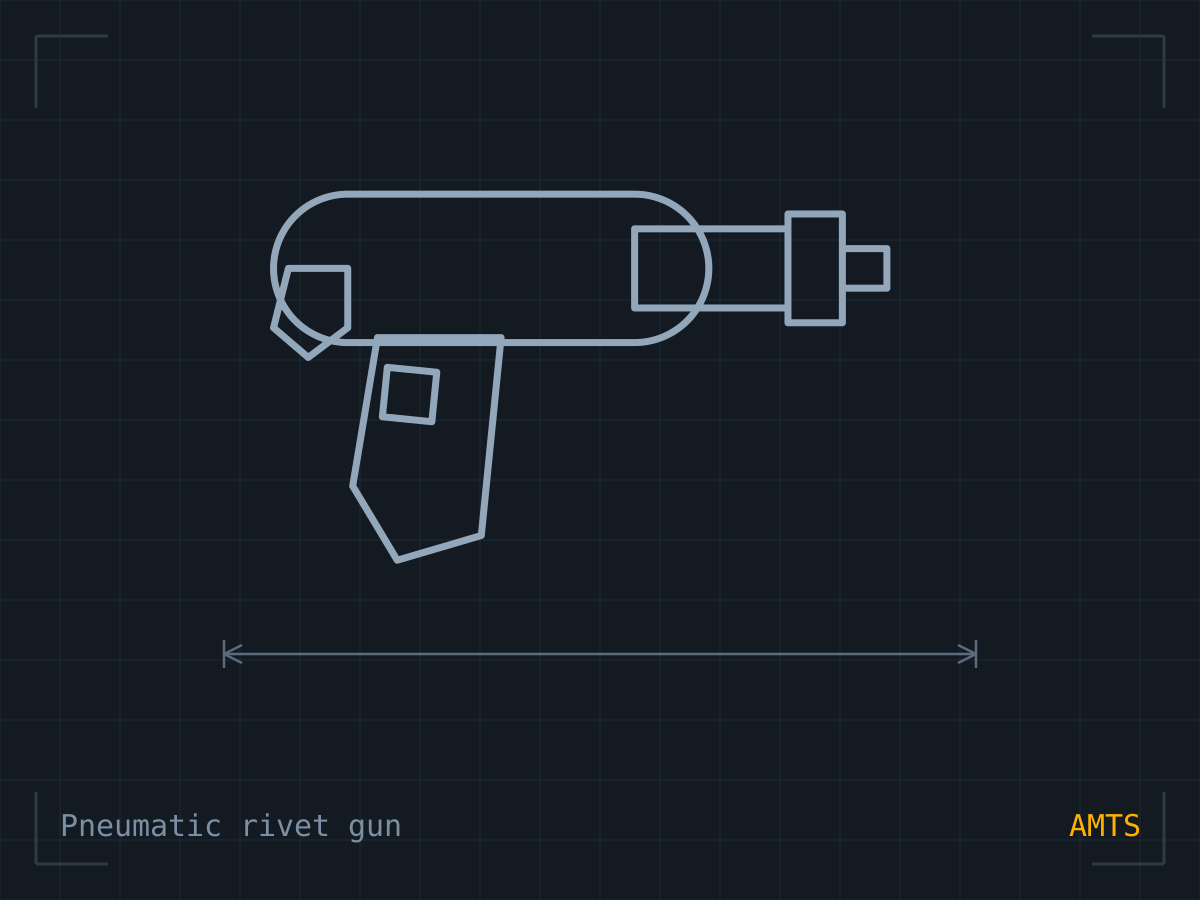
Sheet metal and structures. A gun, bucking bars, sets, dimple dies, a squeezer, clecos and pliers, drills and bits, snips, fluting pliers, a seamer and a rivet gauge. The minimum viable set is smaller than most people expect and considerably more useful than a padded one.
Avionics. Micro drivers, precision pliers, cable crimpers, pin extractors, a continuity tester. Small tools, which makes them exactly the tools that go missing, so this family is always supplied shadowed and marked. A ninety piece avionics kit without shadowing cannot be checked in under an hour, and so in practice it does not get checked.
Engine and powerplant. Compression testing, magneto timing, cylinder work, plus the adapters that make a tester fit the engines you actually operate.
Flight line. Deliberately short. What a turnaround needs, in a box one person can carry, in foam, because a flight line box is opened on a windy apron where a loose tool leaves the box permanently.
Training. A first kit for a student, sized to the syllabus rather than to a career, with tool identification from day one so tool control is a habit rather than something learned later. See training schools.
How a kit is specified
Start from the task and the manual
If the task has a published procedure, the tool list falls out of it. Where a customer or an operator manual dictates a specific tool or a specific torque range, that goes in the kit rather than the nearest equivalent we stock.
Decide what a kit means administratively
This is the part that gets skipped and then causes trouble. A kit issued as one item needs one identity: a kit number, a contents list attached to it, and a decision about whether individual tools are serialised as well. Where a kit is issued to an individual rather than to a bay, that changes the marking scheme.
Foam and marking together
A kit and its insert are designed at the same time, because the drawer layout constrains the tool list as much as the task does. Tools are etched as part of the same job, so the kit arrives complete rather than needing a second pass. See laser tool marking.
Duplicating a kit you already run
If you have a kit that works and you need six more like it, that is the easiest job we do. Send one complete kit, or a full contents list plus the existing insert, and the rest are built to match. Duplicating an existing kit is also how a fleet standardises: after the third identically laid out box, a technician can work out of any of them without looking.
What we will tell you honestly
Some tools we cannot source competitively, and some specialist tools are only available through a manufacturer's own channel. When that is the case you will be told at the quote stage, with the alternatives, rather than finding a substitution in the box. If a kit is better bought from the tool manufacturer directly, we will say so and quote the foam and the marking around it.
Questions we get asked
Can you copy a kit we already use?
Yes, and it is the most straightforward job we do. Send one complete kit or a full contents list plus the existing insert, and the copies are built to match.
Do kits come with the foam and the marking?
They can, and for avionics and flight line kits we recommend it, because a kit of small tools without shadowing cannot realistically be checked. Foam and marking are quoted as part of the kit rather than bolted on afterwards.
Can you build to our customer's tool list?
Yes. Send the relevant part of the manual or the customer specification with the enquiry and the kit is built to it, including where it names a specific tool we would not otherwise have chosen.
How long does a custom kit take?
Normally 10 to 15 working days once the kit list and the layout are agreed. A specialist tool on a long manufacturer lead time can extend that, and you will be told which item is driving the date rather than given a vague estimate.
What if you cannot get one item on the list?
You are told at the quote stage, with the alternatives, and you decide. We do not substitute quietly and we do not ship an incomplete kit as complete.
Are the tools calibrated?
Anything that measures is supplied with a calibration certificate, and that includes torque wrenches in a kit. What interval to run them at afterwards is your decision. Our calibration guide explains how that decision is normally justified to an auditor.